La Crosse County Dog Registration Information
Service Dogs and Emotional Support Animals in La Crosse, Wisconsin
If you’re asking, “where do I register my dog in La Crosse County, Wisconsin for my service dog or emotional support dog?”—the key point is this: a service dog or emotional support animal (ESA) status does not replace the need for a local dog license. In most cases, you still need a dog license in La Crosse County, Wisconsin and proof of current rabies vaccination, even if your dog helps you with a disability or provides emotional support.
This page explains how licensing works locally, what “registration” really means for service dogs and ESAs, and where to register a dog in La Crosse County, Wisconsin using official, local government offices.
Where to Register or License Your Dog in La Crosse County, Wisconsin
Because licensing is handled locally, the right place to start depends on where you live within La Crosse County (for example, City of La Crosse vs. a town like Shelby or Holland, or a village like Holmen). Below are several official offices in La Crosse County that residents commonly use for licensing, animal control questions, or county-level dog licensing help.
Example Official Offices (La Crosse County, Wisconsin)
| Office | Address | Phone | Hours | |
|---|---|---|---|---|
|
La Crosse County Clerk (Dog License / Late Licensing)
La Crosse County
|
212 6th Street North, Room 1500 La Crosse, WI 54601-3355 |
(608) 785-9581 | gdankmeyer@lacrossecounty.org | Not listed on the referenced office contact record |
|
City of La Crosse Treasurer (Animal Licensing Payments)
City of La Crosse
|
City Hall 400 La Crosse St La Crosse, WI 54601 |
(608) 789-7528 | Not listed on the referenced page |
Lobby hours:
Mon–Thu: 8:00 AM–4:00 PMFri: 8:00 AM–12:00 PM Phone questions:
Mon–Fri: 8:30 AM–4:00 PM
|
|
City of Onalaska – City Clerk
City of Onalaska
|
415 Main St Onalaska, WI 54650 |
(608) 781-9530 | dg-cityclerk@onalaskawi.gov | Not listed on the referenced record |
|
Village of Holmen – Clerk/Treasurer (Dog Licensing)
Village of Holmen
|
421 S. Main St P.O. Box 158 Holmen, WI 54636 |
(608) 526-4336 | ahornberg@holmenwi.gov | Mon–Fri: 8:00 AM–4:30 PM |
|
Town of Shelby (Dog & Cat Licensing)
Town of Shelby
|
2800 Ward Avenue La Crosse, WI 54601 |
(608) 788-1032 | info@townofshelbywi.gov |
Mon–Fri: 8:00 AM–4:00 PM Seasonal Friday hours may apply (as listed by the town) |
|
Town of Holland – Town Clerk (Dog Licensing Contact)
Town of Holland
|
W7937 County Road MH City/ZIP not listed on the referenced page |
(608) 526-3354 | clerk@townofhollandwi.gov |
Mondays: 8:00 AM–1:00 PM Wednesdays: 3:00 PM–6:00 PM Thursdays: 8:00 AM–1:00 PM Other times as needed (per town) |
|
La Crosse County Health Department – Animal Control Program (County Program Contact)
La Crosse County
|
300 4th St N, 2nd Floor La Crosse, WI 54601 |
(608) 785-9771 | Not listed on the referenced document | Not listed on the referenced document |
|
Coulee Region Humane Society (Stray Holding / Shelter Contact)
Onalaska (La Crosse County)
|
911 Critter Ct Onalaska, WI 54650 |
(608) 781-4014 | Not listed on the referenced pages | Not listed on the referenced pages |
Tip: If you are unsure which municipality you are in (city, village, or town), start with your municipal clerk/treasurer. If you missed the local licensing period, contact the La Crosse County Clerk for late licensing guidance.
Overview of Dog Licensing in La Crosse County, Wisconsin
What “registering your dog” usually means
In Wisconsin, “registering” a dog typically refers to getting a dog license (sometimes called a dog tag) through your local government. In La Crosse County, licensing is required for dogs that live in the county and are old enough to be licensable, and you generally must show proof of current rabies vaccination when you apply. The county notes that dogs must be vaccinated against rabies and licensed by 5 months of age annually.
Rabies vaccination and licensing go together
Dog licensing is closely tied to rabies prevention and enforcement. Your rabies certificate (or other official proof from a licensed veterinarian) is commonly required before a license tag is issued. Local ordinances and county regulations describe licensing rules and rabies vaccination requirements, and municipalities collect license fees as part of this public health and animal control system.
Why licensing matters (even for service dogs and ESAs)
A license is not the same as “certifying” your service dog or emotional support animal. Instead, the license is a local legal requirement tied to public health (rabies) and identification. If your dog is a service dog, there may be a fee exemption under applicable Wisconsin law and local rules, but the underlying concept remains: licensing is a separate process from disability-related status.
How Dog Licensing Works Locally in La Crosse County, Wisconsin
Step 1: Identify your municipality (city, village, or town)
When people search for “animal control dog license La Crosse County, Wisconsin”, they’re often looking for one central county office. In reality, La Crosse County licensing is commonly handled through your local municipality (for example: City of La Crosse, City of Onalaska, Village of Holmen, Town of Shelby, Town of Holland, etc.). The county indicates that a dog license can be purchased through your municipal treasurer during the standard licensing period.
Step 2: License during the normal window to avoid late fees
The La Crosse County Clerk’s dog licensing guidance states that residents should license between January 1 and March 31 to avoid late fees. If you miss the deadline, the county describes a process where you must purchase a license through the County Clerk’s office and pay a late fee (in addition to the tag cost), and similar timing rules apply if you get a new dog, your puppy reaches licensable age, or you move into the county with a dog and do not license within the required time period.
Step 3: Bring your required documents
Your municipality may ask for owner and dog details (name, address, contact info, dog description) plus rabies vaccination proof. Many local offices also differentiate fees for altered vs. unaltered dogs, so bring spay/neuter documentation if it is not already shown on your rabies certificate.
Step 4: Keep the tag accessible
Once licensed, your dog typically receives a tag number that is kept on file with licensing records. This can help if a dog is found and needs to be reunited with its owner. If you’re still trying to determine where to register a dog in La Crosse County, Wisconsin, the fastest path is to call your municipal clerk/treasurer (or, after the deadline, the La Crosse County Clerk) and confirm exactly what they need for your address.
Service Dog Laws in La Crosse County, Wisconsin
A service dog is not “registered” by the county
A service dog is generally understood as a dog trained to do specific work or tasks for a person with a disability. That status is created by the dog’s training and the handler’s disability-related need—not by a local “service dog registration” office. Local government offices issue dog licenses, not service dog certifications.
Licensing vs. service dog legal status
In La Crosse County, the dog license process is still relevant even if your dog is a service dog. County ordinance language indicates that license fees may not be required for dogs exempted as service dogs under Wisconsin law, but that is different from saying “no license is needed.” The practical takeaway: you may still need to contact your municipal office and ask how they handle service-dog-related licensing or fee exemptions.
Avoid common misinformation about “service dog papers”
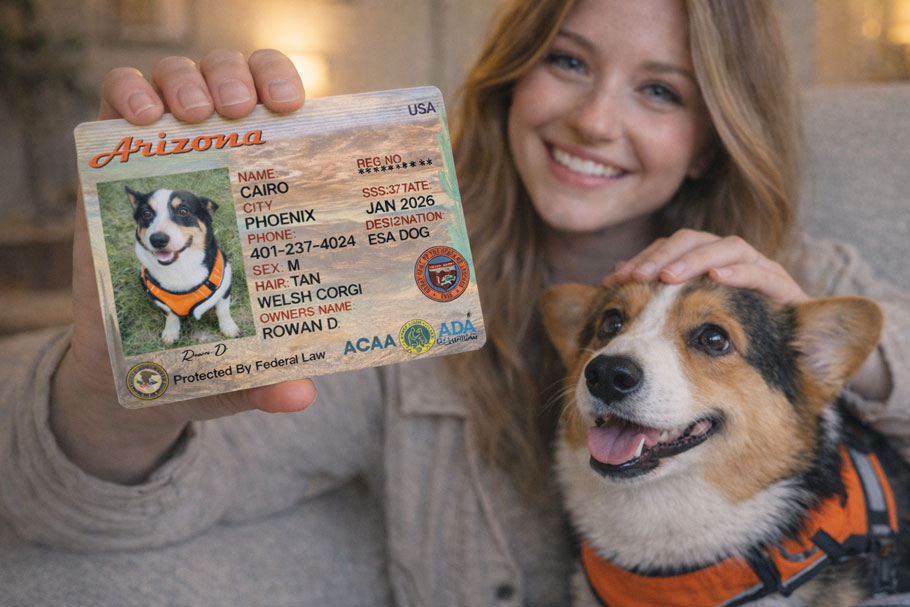
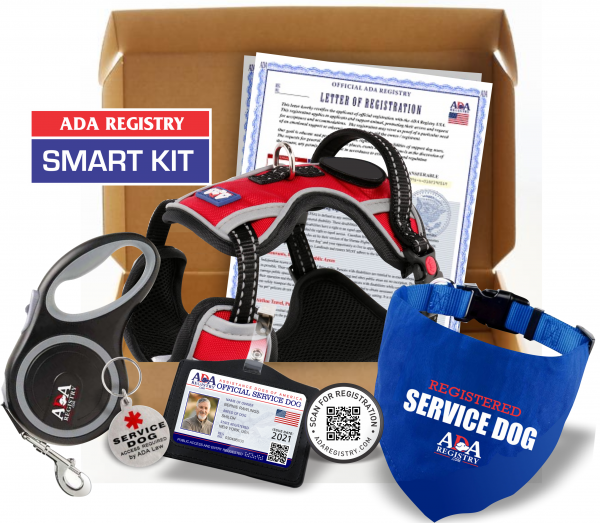
Many people are sold “registrations,” certificates, or ID cards online. Those are typically not required by local licensing offices and should not be confused with: (1) your dog license in La Crosse County, Wisconsin and (2) the legal concept of a service dog. If you need help with public access questions, you can start by licensing your dog locally and then speaking with a qualified professional about service dog training and lawful access rules.
Emotional Support Animal Rules in La Crosse County, Wisconsin
An ESA is not the same as a service dog
An emotional support animal (ESA) generally provides comfort by its presence and is not necessarily trained to perform specific tasks. Because of that, an ESA is typically treated differently than a trained service dog in many legal contexts—especially for public access. No county office “registers” an ESA in a way that replaces municipal dog licensing.
Licensing still applies
If your dog lives in the county and meets the licensing age threshold, you should still plan to obtain a local dog license and keep rabies vaccination current. When people search “where do I register my dog in La Crosse County, Wisconsin for my service dog or emotional support dog”, the most accurate action step is: license your dog through your local city/village/town office, then separately address any housing or accommodation documentation needs you may have for an ESA.
What to say when contacting an office
To get the right answer quickly, ask your municipal clerk/treasurer: “I need to license my dog. What documents do you require, and do you have any fee exemption process for a trained service dog?” For an ESA, focus on licensing requirements (rabies proof, fees, deadlines) rather than “ESA registration,” because the office’s job is licensing and animal control administration—not certifying support-animal status.
Frequently Asked Questions
Service dog status and local licensing are different issues. La Crosse County’s ordinance language indicates there can be a license fee exemption for service dogs under Wisconsin law, but that does not mean you should skip contacting your local licensing office. Ask your municipal clerk/treasurer (or the County Clerk if you are late) how they handle service dog licensing and any fee exemption documentation they require.
City residents typically start with the City of La Crosse Treasurer for animal licensing payments and instructions. If you are outside the city limits, you would normally use your own town/village/city clerk/treasurer instead.
The county indicates that licensing should be completed during the normal period (commonly January 1 through March 31). If you miss it, you may be required to purchase the license through the La Crosse County Clerk and pay a late fee (plus the tag cost). If you’re unsure, call your local municipal office first—they can confirm whether they can still process it or if you must go through the County Clerk.
Requirements vary by municipality, but commonly include proof of current rabies vaccination and basic owner identification/details. Many local offices also charge different fees for altered vs. unaltered dogs, so spay/neuter proof may be needed if it is not already included on the rabies paperwork.
No. An ESA label relates to a person’s need for emotional support and is separate from local dog licensing. A dog license in La Crosse County, Wisconsin is a local legal requirement tied to rabies vaccination and identification, and it applies regardless of whether your dog is an ESA.
Register A Dog In Other Wisconsin Counties
Select your county below to get started with your dog’s ID card. Requirements and license designs may vary by county, so choose your location to see the correct options and complete your pup’s registration.
- Adams County Dog Registration
- Ashland County Dog Registration
- Barron County Dog Registration
- Bayfield County Dog Registration
- Brown County Dog Registration
- Buffalo County Dog Registration
- Burnett County Dog Registration
- Calumet County Dog Registration
- Chippewa County Dog Registration
- Clark County Dog Registration
- Columbia County Dog Registration
- Crawford County Dog Registration
- Dane County Dog Registration
- Dodge County Dog Registration
- Door County Dog Registration
- Douglas County Dog Registration
- Dunn County Dog Registration
- Eau Claire County Dog Registration
- Florence County Dog Registration
- Fond du Lac County Dog Registration
- Forest County Dog Registration
- Grant County Dog Registration
- Green County Dog Registration
- Green Lake County Dog Registration
- Iowa County Dog Registration
- Iron County Dog Registration
- Jackson County Dog Registration
- Jefferson County Dog Registration
- Juneau County Dog Registration
- Kenosha County Dog Registration
- Kewaunee County Dog Registration
- Lafayette County Dog Registration
- Langlade County Dog Registration
- Lincoln County Dog Registration
- Manitowoc County Dog Registration
- Marathon County Dog Registration
- Marinette County Dog Registration
- Marquette County Dog Registration
- Menominee County Dog Registration
- Monroe County Dog Registration
- Oconto County Dog Registration
- Oneida County Dog Registration
- Outagamie County Dog Registration
- Ozaukee County Dog Registration
- Pepin County Dog Registration
- Pierce County Dog Registration
- Polk County Dog Registration
- Portage County Dog Registration
- Price County Dog Registration
- Racine County Dog Registration
- Richland County Dog Registration
- Rock County Dog Registration
- Rusk County Dog Registration
- Sauk County Dog Registration
- Sawyer County Dog Registration
- Shawano County Dog Registration
- Sheboygan County Dog Registration
- St. Croix County Dog Registration
- Taylor County Dog Registration
- Trempealeau County Dog Registration
- Vernon County Dog Registration
- Vilas County Dog Registration
- Walworth County Dog Registration
- Washburn County Dog Registration
- Washington County Dog Registration
- Waukesha County Dog Registration
- Waupaca County Dog Registration
- Waushara County Dog Registration
- Winnebago County Dog Registration
- Wood County Dog Registration